
Tuesday, 9/22 • 1:00 PM
Gender and Causing Good Trouble: Embracing Gender Non-Conforming and Transgender Identities
Presenter: Jennie Woodard
The late Senator John Lewis once described the act of “getting in good trouble” as a way to encourage people to reject oppression and injustice in order to bring about positive social change. While many attribute this idea to Sen. Lewis’ radical work for Civil Rights, “good trouble” is in reference to all types of social injustice, including those who exist outside the construct of gender as male and female. The rigor of living in accordance with the strict societal rules of gender has the potential to harm many in society, but for those who identify outside of this binary, the effects can have detrimental psychological, social, emotional, and physical ramifications. Suicide ideation is common among transgender and non-binary youth while many adults are denied health care, job security, housing, and more due to prejudices and preconceived notions about their gender. This lecture will provide insight to these issues as well as ways to support those who embody these identities, including ourselves and those around us.
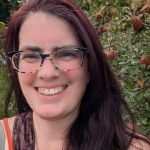 Jennie Woodard is a Lecture of Communication at the University of Maine Augusta. Her background in Women’s, Gender, and Sexuality Studies as well as Cultural History form her teaching and research at UMA. She lives with her spouse, teenager, and cat (with hopes for a dog in the new year) and loves gardening, hiking, puzzles, baking and crafts.
Tuesday, 9/29 • 1:00 PM
How’s About Them Apples? The Adventures of Researching Heirloom Apple History
Presenter: Kerry Wilkins
Let’s learn about the preservation of Maine’s heirloom apples from the late 1700’s to present as well as the rich history of apple orcharding. We’ll explore visual identification of apples to DNA testing. We are still solving mysteries about Maine’s apples with the hope of preserving the heirlooms. I am not an expert, I am enthusiast.
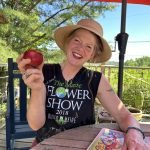 Kerry Wilkins has been a resident of Winthrop for 30+ years. She grew up picking apples in Chick’s Orchards in Monmouth, Maine and was always curious about how apples got their names. The most intriguing apple was the Northern Spy. As a lifelong Common Ground Volunteer, she stumbled upon John Bunker, attended a lecture and went down the rabbit hole of apple history. At the encouragement of Bunker, Kerry visited East Bloomfield, NY in the quest of researching the naming of the Northern Spy apple which segued into researching Pondtown’s (later known as Winthrop) rich apple history from the late 1700’s to the present. You can hear Kerry’s podcast appearance on Cider Chat Episode 368 “Who Named This Apple?” She has presented three lectures to Winthrop Historical Society in the past few years.
Tuesday, 10/6 • 1:00 PM
Finding YOUR California Gold Rush ’49er(s)
Presenter: Ron Kley
Talk will explore methods and sources for identification of individuals who left Maine and participated in the California gold rush. There were thousands — to the point that many Mine communities feared “death by depopulation.”
Yet few of these individuals are known or remembered in the communities or even in the families that they came from.
 My teaching/lecturing experience and related museum work has taken me throughout the U.S. and Canada since the early 1960s, as well as to Europe, Africa, and Australia. I’ve taught geology courses at B.U., UMA during its embryonic days on Western Avenue, and at Hayward State University in California.I also served in the military as Research and Technical Operations officer for USACENCG — the U.S. Army Corps of Engineers Nuclear Cratering Group based at the Lawrence Radiation Laboratory in Livermore, California. I’ve been a resident of East Winthrop, Maine since 1968 when I arrived from California to begin a twenty year tenure as head of the Research and Collections Division at Maine’s State Museum.
Tuesday, 10/13 • 1:00 PM
The Influence of the League of the Iroquois on Our Constitution
Presenter: Liz Champeon
Using the Great Law of Peace as a template, the writers of the United States Constitution did not extablish a state religion; religion would be treated as a personal philosophy. The United States Constitution was written allowing various states to make their own rules about their local issues. The federal executive was elected, and the position was not hereditary. These ideas did not arise in a vacuum among the immigrating Europeans, and the ideas moved eastward back across the Atlantic to the Old World.
This lecture reviews the influence of the Great Law of Peace, revealing that large portions of our Constitution reflect the structure and even the wording of the Great Law of Peace of the Haudenosaunee, the League of the Iroquois, probably the oldest constitutional government in the world.
 Liz Champeon is a sixth generation Mainer, although through no fault of her own, she was born out of state. She is a Maine Register Geologist, and has Native American heritage through her father’s side.
Tuesday, 10/20• 1:00 PM
Vessels of Dawnland: A Personal Exploration of Wabanaki Basketry
Presenter: Carter Meyer
Wabanaki basketry has garnered considerable public attention of late as a rising generation of basket makers explore bold new directions in their work and innovative ways to express their culture and identity. For Carter Jones Meyer, a history professor and Native art collector who recently retired to Midcoast Maine from New Jersey, exploring this art form’s resurgence has been an invigorating personal journey, not only in regard to learning about contemporary Wabanaki culture, but also the history that has shaped it. She will share some of her insights into this journey, and also discuss examples of Wabanaki basketry she has collected along the way.
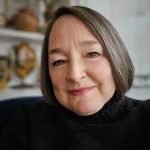 Carter Jones Meyer is Professor Emerita of History at Ramapo College of New Jersey. She received a B.A. in American Studies from Skidmore College, where she was elected to Phi Beta Kappa, and earned both the M.A. and Ph.D. in American Studies at Brown University. Carter specializes in and has published widely in the fields of late nineteenth and early twentieth century American cultural history, the history of the American West, and Native American history. At Ramapo, she served as chair of both the History and American Studies programs, and received awards for excellence in teaching and for significant contributions to the development of the College. In retirement she continues to pursue her interests in history, art, and culture, not only as a docent at the Farnsworth Art Museum, but also as a student and collector of Native art, including serving as a judge at Santa Fe Indian Market, the largest juried Native art show in the world. Most recently she has taught Native American history at the University of Southern Maine in addition to co-teaching with Chris Williamson “Virtual Tours of the Farnsworth Art Museum” for UMASC.
Tuesday, 10/27 • 1:00 PM
The Geology of Maine
Presenter: Peter Garrett
Everyone living in Maine knows the basic geology of the state. There’s Bedrock (AKA “ledge”), and on top of that there’s Dirt.
Maine’s Bedrock history goes back more than 600 million years. What are now rocks mostly originated as marine sediments, dateable by fossils. They are folded and faulted, with intrusions of igneous rocks (mostly granites), with some volcanics. Rocks were metamorphosed during the continental collision that joined all Earth’s continents into one: “Pangea”.
Then there is a gap, with no recorded geological history. The Dirt lying on top of Bedrock includes deposits from the last Ice Age event, dated between 18,000 and 11,000 years ago. Most of the landforms on which we have built our civilization were formed at this time. Some have odd names like ësker”, moraine”, “till”and “marine clay”. All this will be explained, so welcome to Maine Geology!
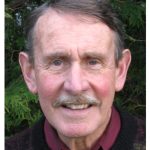 Peter Garrett has a PhD from Johns Hopkins in Earth Science. He lived and worked in Maine as a professional geologist from 1979 until his retirement in 2012. His work, though primarily in the specialty of hydrogeology, also includes a keen interest in how Maine’s geology came to be the way it is. He has taught Geology at Colby College, the University of Maine, and most recently at the Maine Maritime Academy.
He has given this talk on the “Geology of Maine” to overflow audiences in Winslow and Waterville. Peter will explain how the two types of geology that underlie the State came to be. They are the bedrock (“ledge”), and the variety of deposits left from the last Ice Age. Those who have heard his talk say that it explains some of the extraordinary details of the science of geology, not just the geology of this part of the world.
Tuesday, 11/3 • 1:00 PM
Tick Talk: Discussion of Lyme Disease, Anaplasmosis, and Other Diseases Associated with Tick Bites
Presenter: James Schneid
It seems there has been an ”uptick” in insect (tick) born illness in Maine this year. We will discuss your questions about ticks, how to avoid them and what to do if you find a tick on yourself. We will also discuss common illness caused by theres interesting inhabitants in Maine.
 James Schneid is Board Certified in Family Medicine as well as Hospice and Palliative Medicine. He is the previous Program Director and Chair of the Maine Dartmouth Family Medicine Residency and is an Associate Professor of Family and Community Medicine at the Dartmouth Geisel School of Medicine.
Jim has a lifelong interest in End Palliative Care Fellowship for physicians at the Togus V.A. Hospital and Maine Medical Center. As the VA Hospice Medical Director, he enjoyed teaching nurses, chaplains, social workers, medical students, resident physicians, fellows, and attendings the art of Palliative Medicine. Jim is still a faculty member preceptor at the Family Medicine Institute in Augusta and on the active staff of Androscoggin Home Healthcare and Hospice.
Tuesday 11/10 • 1:00PM
A Tale of Two Italys: the North-South Divide
Presenter: Dan Possumato
Italy’s economy is more geographically divided than any other country in Europe. The north has a GDP per capita equal to 127% of the EU average, while the south is only 56%. There is a pronounced social, cultural, and political divide as well. The well-worn stereotypes about the north and south persist, both within the country and abroad. People are rich and reserved in the industrial north, while the south is friendly but impoverished, chaotic, and crimeridden. We will examine how true these statements are, the historical differences between the two regions, and ponder the reasons why all efforts to eliminate the disparity since the 19th century have failed.
 Dan Possumato is a retired senior civilian employee of the U.S. Army. He has a master’s degree from Johns Hopkins University, is a graduate of the Army War College, and he was a professor at the Army Management Staff College in Virginia. He has taught classes for OLLI in Pittsburgh and Portland. He is a dual U.S. — Italian citizen and enjoys sharing his knowledge of Italy with others.
SONGKRAN – THE THAI NEW YEAR CELEBRATION
Presenter: Elizabeth (Liz) Champeon
Presenter: Elizabeth (Liz) Champeon
Elizabeth (Liz) Champeon is a geologist by trade but has had a long-time interest in history. She is a graduate of the University of Maine and her father’s family has lived in New England since the 1600’s.
WHAT HATH FRANCIS WROUGHT?
Presenter: Mike Bell
Presenter: Mike Bell

Mike Bell loves American history! With a master’s degree in both history and teaching and an undergrad degree in political science, he has enjoyed a varied career in teaching and historical interpretation. Mike appeared on a History Channel special about PT 109, and for over 20 years portrayed many historical figures, including Butch Cassidy and Sam Houston.
TAKE A HIKE WITH KENNEBEC LAND TRUST
Presenters: Theresa Kerchner and the Staff of the Kennebec Land Trust
Learn about Kennebec Land Trust’s (KLT) land conservation criteria, our work to address climate change, the difference between conservation easements and fee ownership, new trails and properties, careers in the conservation field, Local Wood WORKS (LWW) and sustainable forestry, and more. As the owner of land in Kennebec County, KLT pays taxes at the open space rate. We look forward to seeing you! Bring your questions and suggestions for future partnerships.

Presenters: Theresa Kerchner and the Staff of the Kennebec Land Trust
Theresa Kerchner is the executive director of KLT. She oversees the operations of the Trust and works with the Board of Directors and KLT staff to develop and implement organizational, land conservation, and fundraising goals. Theresa is a founding partner of LWW, a statewide initiative that aims to promote and advance forestland conservation and northeast wood products markets simultaneously.
KLT stewardship staff Jean Luc Theriault and Tyler Keniston, and outreach staff Baylee Bachelder and John Whittaker will highlight upcoming 2025 projects, with a focus on “A Trail for Everyone,” education programming and public access to conservation land. https://www.tklt.org/staff
QUESTION – “WHAT IS AMERICAN MUSIC?” ANSWER - “IRVING BERLIN!”
Presenter: Peter Rosenberg
This lecture will be a review of the fascinating life of Irving Berlin who, in his life span of 101 years, wrote the words and lyrics of 1500 songs, many of which we know and can sing today such as Alexanders Rag Time Band, Blue Skies, and There’s No Business like Show Business.

Presenter: Peter Rosenberg
Peter Rosenberg is a retired Otolaryngologist who was educated at Clinton Grade School, Poughkeepsie High School, Princeton University, Tufts Medical School and Walter Reed Army Medical Center. He practiced ENT at Fort Bragg, solo in Norwich CT, and at the Togus Veterans Administration Hospital. His wide range of activities include playing piano, golf, tennis, bridge, model boats, stained glass and teaching at UMASC.
ISLANDS AGAIN!
Presenter: Elizabeth Reinsborough
Surrounded by water, islands can be found in oceans rivers or lakes. All are classified as either continental (ex: Greenland) or oceanic (ex: Hawaii). This program will look at the different types of islands with examples from six continents. It will touch on geography, history, biology, geology, and other interesting facts, depending on the island. Come and be surprised by each island.

Presenter: Elizabeth Reinsborough
Elizabeth Reinsborough was born in Northern Ireland. She was educated at Queens University, Belfast and University College, London. She has worked in a plant breeding program in Tanzania and taught biology in Maine for 20 years. Elizabeth has traveled widely in the United States, often with a focus on our National Parks. She enjoys hiking and for 20 years was a maintainer on the Appalachian Trail in the 100 mile wilderness.
BUMBLE BEES IN MY BACKYARD
Presenter: Dave Hobbins
Among the largest of our native bees, bumble bees are social creatures that form small colonies in nests and inhabit temperate to arctic regions of the world. Pollination by bumble bees is essential to the propagation of many native plants. Bumble bees are perhaps the most efficient of the pollinators. Because of this, they also have become commercially important for crops like tomatoes and blueberries. We will discuss some bee biology, the species found in the St. John Valley, the plants they prefer, and what you can do to favor them in your yard or neighborhood.

Presenter: Dave Hobbins
Dave Hobbins is a University of Maine at Fort Kent Emeritus Professor who retired in 2018. He lives in Fort Kent with his wife of 33 years and pursues his interests in hiking, history, backyard astronomy, bumble bees, and working his woodlot. This presentation is based on work he continues since his first involvement with the Maine Bumble Bee Atlas in 2016.
UNDERSTANDING CONGESTIVE HEART FAILURE, TREATMENT AND PROGNOSIS
Presenter: James Schneid
In the presentation, I will attempt to define Congestive Heart Failure and its various presentations. We will then discuss common treatments for the condition and briefly outline prognosis and the natural progression of the illness.
Presenter: James Schneid
James Schneid is Board Certified in Family Medicine as well as Hospice and Palliative Medicine. He is the previous Program Director and Chair of the Maine Dartmouth Family Medicine Residency and is an Associate Professor of Family and Community Medicine at the Dartmouth Geisel School of Medicine. Jim has a lifelong interest in End of Life issues and in 2017 helped develop the first Hospice and Palliative Care Fellowship for physicians at the Togus V.A. Hospital and Maine Medical Center. As the VA Hospice Medical Director, he enjoyed teaching nurses, chaplains, social workers, medical students, Resident physicians, fellows, and attendings the art of Palliative Medicine. Jim is still a faculty member preceptor at the Family Medicine Institute in Augusta and on the active staff of Androscoggin Home Healthcare and Hospice.
THE INTERSECTION OF MARINE ART AND NATURAL HISTORY
Presenter: Patricia Sullivan
This is an updated version of a talk first given in January 2022, It illustrates the branch of marine art converging with natural history. Sea explorers often had illustrators aboard who sketched new animal and plant species encountered on their voyages. This work was often published and contributed to an interest in scientific study and tourism. Later land-based artists, like JJ Audubon, traveled by river and stream to record the flora and fauna they found. In the late 19th and early 20th centuries, such art was used to publicize new travel routes and destinations available by steamship and ocean liners.

Presenter: Patricia Sullivan
Patricia Sullivan received her B.A. and M.A. in History from George Washington University. She directed three notable American historic house museums and later became a consultant for the American Association of Museums and the Institute of Museum Services. In addition to curating several exhibits and developing major collection management strategies, Sullivan also developed the action and operating plan for the Newseum, a Washington DC museum of journalism, and she created future operating plans for the U.S. Mint (Bureau of Engraving and Printing) and the Museum of Latin American Art, both in Washington D.C. Sullivan established the Museum of Maritime Pets in 2006, and is its Chief Operating Officer. The Museum has a world-wide following and as of September 2021, shares space and collaborates with the Maine Lighthouse Museum in Rockland.