

Tuesday, January 6 • 1:00 PM
Let’s Take a Wildflower Hike
Presenter: Nina Mollicone
Nina Mollicone 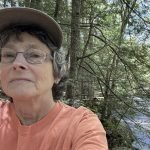 grew up in Winthrop and graduated from UMaine with a BA in Zoology. Seeking a career in which she could get a job virtually anywhere in the world, Nina returned to school for a nursing degree and went on to have a very successful 42 year career as a Registered Nurse. In retirement, she has returned to her roots, exploring and studying almost anything nature related.
Tuesday, January 13 • 1:00 PM
Becoming a Hospice Volunteer: Informational Session on What It Means to be a Hospice Volunteer
Presenter: Loretta McNeil
Hospice volunteers are essential members of the hospice team. Some patients don’t have loved ones who are able to visit. Volunteers help reduce those feelings of loneliness by providing social connections. Companionship can greatly improve a patient’s quality of life. Volunteers hear stories of times passed, meet new people, and create meaningful relationships. Volunteers also fill the critical job of providing respite for caregivers. Caring for someone who is terminally ill can be physically and emotionally exhausting, and volunteers can help caregivers have time to take care of their own needs and get a much-deserved break. By becoming a hospice volunteer, you can gain great personal satisfaction from knowing that you have made an impact in another person’s life and have contributed to your community in a compassionate and caring way. Hospice care in the U.S. was founded by volunteers and there is continued commitment to volunteer service!
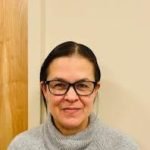 Loretta McNeil is the Supervisor of Hospice Volunteer and Bereavement Services at MaineGeneral Hospice in Augusta, Maine, where she has served since January 2021. With a background in mental health counseling, Loretta earned her M.Ed. in Mental Health Counseling from Cambridge College in 2014. She also holds a B.A. in Behavioral Science from Drew University. In her current role, she oversees volunteer services and provides bereavement support, helping individuals navigate the challenges of end-of-life care. Her experience and compassionate approach make her a valuable resource for those interested in hospice volunteering and supporting families through the grieving process. Through her informational lectures, Loretta aims to educate and inspire others to get involved in hospice care, highlighting the impact volunteers can have in providing comfort, companionship, and a sense of dignity to those at the end of life.
Tuesday, January 20 • 1:00 PM
Parkinson’s Disease: What Is It and How Can It Be Evaluated and Treated?
Presenter:James Schneid
Parkinson’s Disease is a movement disorder of the nervous system that worsens over time. We will discuss how it presents clinically, testing and treatment.
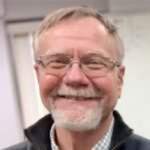 James Schneid is Board Certified in Family Medicine as well as Hospice and Palliative Medicine. He is the previous Program Director and Chair of the Maine Dartmouth Family Medicine Residency and is an Associate Professor of Family and Community Medicine at the Dartmouth Geisel School of Medicine. Jim has a lifelong interest in End of Life issues and in 2017 helped develop the first Hospice and Palliative Care Fellowship for physicians at the Togus V.A. Hospital and Maine Medical Center. As the VA Hospice Medical Director, he enjoyed teaching nurses, chaplains, social workers, medical students, resident physicians, fellows, and attendings the art of Palliative Medicine. Jim is still a faculty member preceptor at the Family Medicine Institute in Augusta and on the active staff of Androscoggin Home Healthcare and Hospice.
Tuesday, January 27 • 1:00 PM
Five Amazing Places and Their Bumble Bees
Presenter: Dave Hobbins
In 2024, Dave Hobbins went out west to hike and hunt for bumble bees. This presentation examines the state parks and wilderness areas visited in Ohio, Illinois, South Dakota and Wyoming and some biology of the bumble bees found.
 Dave Hobbins is retired from the UMFK forestry program who got involved as a citizen scientist for the Maine Bumble Bee Atlas in 2017. He has been hooked on bumble bees ever since. He lives with his wife in Fort Kent and is a member of the St John Valley Senior College.
Tuesday, February 3 • 1:00 PM
Ghost Stories of My Maine Childhood
Presenter: Elizabeth (Liz) Champeon
My childhood was spent both in Massachusetts and in Jonesboro. Some people read to their children at bedtime. My two sisters and I shared a bedroom, and almost every night, my father sat on the edge of one of the beds and told stories of the family. When one of my sisters reached adulthood, she researched the stories, and told me, “Liz, it’s all there.” Some of the stories have been published in recent years. This lecture tells some of the more ghostly ones.
Liz Champeon i s a Professional Geologist who has been mostly retired for some time. She enjoys history, both human and geological.
This presentation is part of UMASC’s celebration of UMA’s 60th Anniversary.
Tuesday, February 10 • 1:00 PM
Gender and Causing Good Trouble: Embracing Gender Non-Conforming and Transgender Identities
Presenter: Jennie Woodard
The late Senator John Lewis once described the act of “getting in good trouble” as a way to encourage people to reject oppression and injustice in order to bring about positive social change. While many attribute this idea to Sen. Lewis’ radical work for Civil Rights, “good trouble” is in reference to all types of social injustice, including those who exist outside the construct of gender as male and female. The rigor of living in accordance with the strict societal rules of gender has the potential to harm many in society, but for those who identify outside of this binary, the effects can have detrimental psychological, social, emotional, and physical ramifications. Suicide ideation is common among transgender and non-binary youth while many adults are denied health care, job security, housing, and more due to prejudices and preconceived notions about their gender. This lecture will provide insight to these issues as well as ways to support those who embody these identities, including ourselves and those around us.
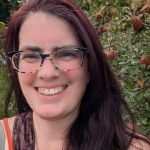 Jennie Woodard is a Lecturer of Communication at the University of Maine Augusta. Her background in Women’s, Gender, and Sexuality Studies as well as Cultural History from her teaching and research at UMA. She lives with her spouse, teenager, and cat (with hopes for a dog in the new year) and loves gardening, hiking, puzzles, baking and crafts.
Tuesday, February 17 • 1:00 PM
Fortress of Louisbourg: Failed Sentry of New France
Presenter: Cheryl and Louis Fontaine
Fortress of Louisbourg National Historic Site is located on Cape Breton Island, Nova Scotia, Canada. It is the largest colonial reconstruction on the Atlantic coast. This lecture will present the historical importance of the fortress to the French Empire in North America and how it failed to protect New France (Canada) against the British Empire. The second part of the lecture will present the site as it is today. Fortress of Louisbourg National Historic Site recreates a quarter of town and fortress as it existed in the 1740s and attracts over 75 thousand visitors in a year. The site is populated by interpreters who recreate many aspects of French colonial society.
 Cape Breton Island and Louisbourg are favorite vacation destinations of Louis and Cheryl Fontaine. They have visited the fortress several times, most recently in 2023.
Tuesday, February 24 • 1:00 PM
Scotland: North of Hadrian’s Wall
Presenter: Elizabeth Reinsborough
Mountains and glens, bagpipes and castles, lochs and tarns, Highlands and Lowlands, crofts and moorlands, the list goes on! Scotland on the northern fringe of Europe has stunning scenery, one of the most beautiful cities in Europe and generous hospitality. We will explore from Gretna Green to John O’ Groats and on to the Orkney Islands. We’ll climb Ben Nevis, ferry to Historical Iona and wander around the windswept Gaelic speaking, romantic western Isles.
 Elizabeth Reinsborough was born in Northern Ireland. She was educated at Queens University, Belfast and University College, London. She has worked in a plant breeding program in Tanzania and taught biology in Maine for 20 years. Elizabeth has traveled widely both in the United States and around the world. She enjoys hiking and for 20 years was a maintainer on the Appalachian Trail in the 100 mile wilderness.
SONGKRAN – THE THAI NEW YEAR CELEBRATION
Presenter: Elizabeth (Liz) Champeon
Presenter: Elizabeth (Liz) Champeon
Elizabeth (Liz) Champeon is a geologist by trade but has had a long-time interest in history. She is a graduate of the University of Maine and her father’s family has lived in New England since the 1600’s.
WHAT HATH FRANCIS WROUGHT?
Presenter: Mike Bell
Presenter: Mike Bell

Mike Bell loves American history! With a master’s degree in both history and teaching and an undergrad degree in political science, he has enjoyed a varied career in teaching and historical interpretation. Mike appeared on a History Channel special about PT 109, and for over 20 years portrayed many historical figures, including Butch Cassidy and Sam Houston.
TAKE A HIKE WITH KENNEBEC LAND TRUST
Presenters: Theresa Kerchner and the Staff of the Kennebec Land Trust
Learn about Kennebec Land Trust’s (KLT) land conservation criteria, our work to address climate change, the difference between conservation easements and fee ownership, new trails and properties, careers in the conservation field, Local Wood WORKS (LWW) and sustainable forestry, and more. As the owner of land in Kennebec County, KLT pays taxes at the open space rate. We look forward to seeing you! Bring your questions and suggestions for future partnerships.

Presenters: Theresa Kerchner and the Staff of the Kennebec Land Trust
Theresa Kerchner is the executive director of KLT. She oversees the operations of the Trust and works with the Board of Directors and KLT staff to develop and implement organizational, land conservation, and fundraising goals. Theresa is a founding partner of LWW, a statewide initiative that aims to promote and advance forestland conservation and northeast wood products markets simultaneously.
KLT stewardship staff Jean Luc Theriault and Tyler Keniston, and outreach staff Baylee Bachelder and John Whittaker will highlight upcoming 2025 projects, with a focus on “A Trail for Everyone,” education programming and public access to conservation land. https://www.tklt.org/staff
QUESTION – “WHAT IS AMERICAN MUSIC?” ANSWER - “IRVING BERLIN!”
Presenter: Peter Rosenberg
This lecture will be a review of the fascinating life of Irving Berlin who, in his life span of 101 years, wrote the words and lyrics of 1500 songs, many of which we know and can sing today such as Alexanders Rag Time Band, Blue Skies, and There’s No Business like Show Business.

Presenter: Peter Rosenberg
Peter Rosenberg is a retired Otolaryngologist who was educated at Clinton Grade School, Poughkeepsie High School, Princeton University, Tufts Medical School and Walter Reed Army Medical Center. He practiced ENT at Fort Bragg, solo in Norwich CT, and at the Togus Veterans Administration Hospital. His wide range of activities include playing piano, golf, tennis, bridge, model boats, stained glass and teaching at UMASC.
ISLANDS AGAIN!
Presenter: Elizabeth Reinsborough
Surrounded by water, islands can be found in oceans rivers or lakes. All are classified as either continental (ex: Greenland) or oceanic (ex: Hawaii). This program will look at the different types of islands with examples from six continents. It will touch on geography, history, biology, geology, and other interesting facts, depending on the island. Come and be surprised by each island.
Presenter: Elizabeth Reinsborough
Elizabeth Reinsborough was born in Northern Ireland. She was educated at Queens University, Belfast and University College, London. She has worked in a plant breeding program in Tanzania and taught biology in Maine for 20 years. Elizabeth has traveled widely in the United States, often with a focus on our National Parks. She enjoys hiking and for 20 years was a maintainer on the Appalachian Trail in the 100 mile wilderness.
BUMBLE BEES IN MY BACKYARD
Presenter: Dave Hobbins
Among the largest of our native bees, bumble bees are social creatures that form small colonies in nests and inhabit temperate to arctic regions of the world. Pollination by bumble bees is essential to the propagation of many native plants. Bumble bees are perhaps the most efficient of the pollinators. Because of this, they also have become commercially important for crops like tomatoes and blueberries. We will discuss some bee biology, the species found in the St. John Valley, the plants they prefer, and what you can do to favor them in your yard or neighborhood.
Presenter: Dave Hobbins
Dave Hobbins is a University of Maine at Fort Kent Emeritus Professor who retired in 2018. He lives in Fort Kent with his wife of 33 years and pursues his interests in hiking, history, backyard astronomy, bumble bees, and working his woodlot. This presentation is based on work he continues since his first involvement with the Maine Bumble Bee Atlas in 2016.
UNDERSTANDING CONGESTIVE HEART FAILURE, TREATMENT AND PROGNOSIS
Presenter: James Schneid
In the presentation, I will attempt to define Congestive Heart Failure and its various presentations. We will then discuss common treatments for the condition and briefly outline prognosis and the natural progression of the illness.
Presenter: James Schneid
James Schneid is Board Certified in Family Medicine as well as Hospice and Palliative Medicine. He is the previous Program Director and Chair of the Maine Dartmouth Family Medicine Residency and is an Associate Professor of Family and Community Medicine at the Dartmouth Geisel School of Medicine. Jim has a lifelong interest in End of Life issues and in 2017 helped develop the first Hospice and Palliative Care Fellowship for physicians at the Togus V.A. Hospital and Maine Medical Center. As the VA Hospice Medical Director, he enjoyed teaching nurses, chaplains, social workers, medical students, Resident physicians, fellows, and attendings the art of Palliative Medicine. Jim is still a faculty member preceptor at the Family Medicine Institute in Augusta and on the active staff of Androscoggin Home Healthcare and Hospice.
THE INTERSECTION OF MARINE ART AND NATURAL HISTORY
Presenter: Patricia Sullivan
This is an updated version of a talk first given in January 2022, It illustrates the branch of marine art converging with natural history. Sea explorers often had illustrators aboard who sketched new animal and plant species encountered on their voyages. This work was often published and contributed to an interest in scientific study and tourism. Later land-based artists, like JJ Audubon, traveled by river and stream to record the flora and fauna they found. In the late 19th and early 20th centuries, such art was used to publicize new travel routes and destinations available by steamship and ocean liners.

Presenter: Patricia Sullivan
Patricia Sullivan received her B.A. and M.A. in History from George Washington University. She directed three notable American historic house museums and later became a consultant for the American Association of Museums and the Institute of Museum Services. In addition to curating several exhibits and developing major collection management strategies, Sullivan also developed the action and operating plan for the Newseum, a Washington DC museum of journalism, and she created future operating plans for the U.S. Mint (Bureau of Engraving and Printing) and the Museum of Latin American Art, both in Washington D.C. Sullivan established the Museum of Maritime Pets in 2006, and is its Chief Operating Officer. The Museum has a world-wide following and as of September 2021, shares space and collaborates with the Maine Lighthouse Museum in Rockland.